Clockwork Edges: Mapping Fixture Timings and Recovery Windows in International Events to Refine Multi-Event Wagers
Written by Theo Lehmann · Jun 21, 2026

Clockwork Edges: Mapping Fixture Timings and Recovery Windows in International Events to Refine Multi-Event Wagers
International sports calendars pack dense sequences of matches and races into short periods, and observers note that precise mapping of fixture start times against documented recovery intervals helps refine multi-event wagers across football, tennis circuits, and thoroughbred meetings. Data from major governing bodies shows that athletes and teams face measurable windows for physiological restoration after transcontinental travel, and those windows shift according to time-zone changes, match duration, and surface demands.
Fixture Timings Across Global Calendars
June 2026 brings the FIFA World Cup expanded to 48 teams with group-stage matches scheduled across multiple North American venues, and scheduling records indicate that teams often play with as little as three full days between fixtures when venues sit in different time zones. Similar compression appears in the ATP and WTA tours where players cross hemispheres within a single week, while major racing festivals in Europe, Australia, and North America cluster high-grade races on consecutive days. Researchers at the Australian Institute of Sport have tracked heart-rate variability and sleep metrics in athletes moving between these events, and the resulting datasets reveal consistent patterns in how recovery length correlates with subsequent performance metrics.
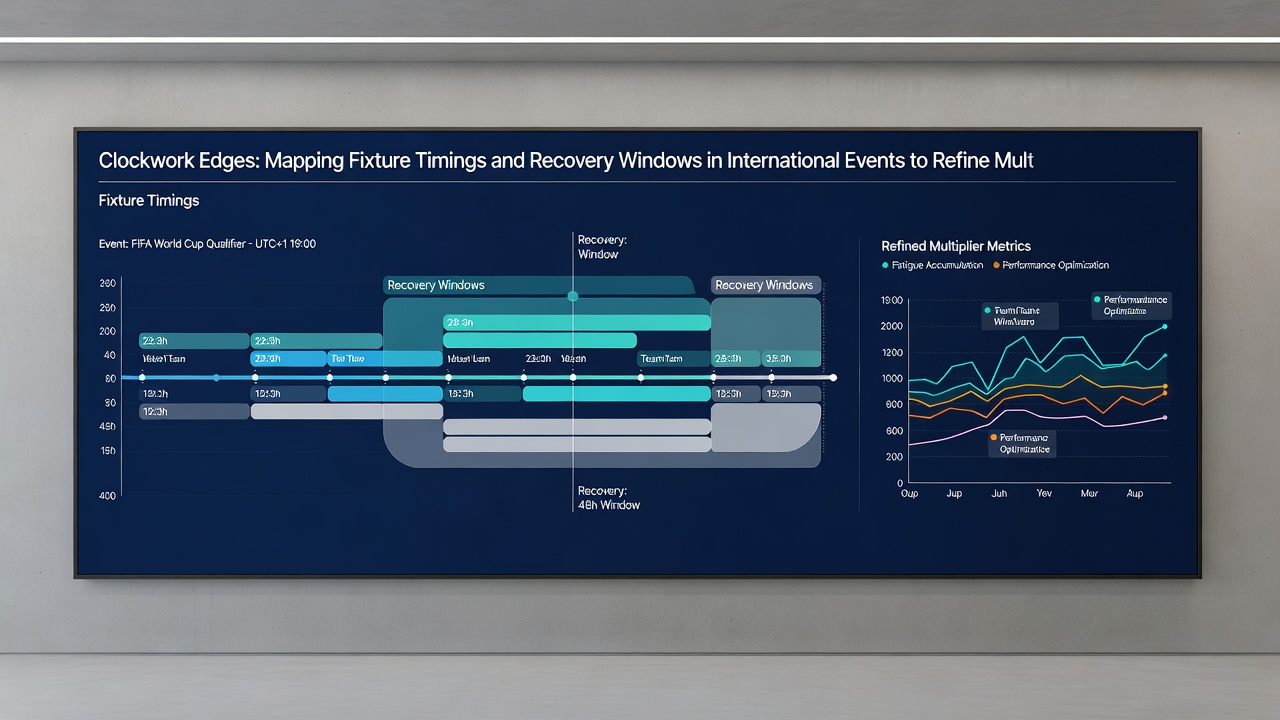
Analysts compile start times from official competition bulletins, cross-reference them with published travel itineraries, and layer in historical performance drops recorded after rapid turnaround periods. This produces layered timelines that highlight clusters where multiple sports overlap, allowing wager construction that accounts for both fixture density and the physiological load each athlete carries into the next contest.
Recovery Windows and Performance Indicators
Physiological studies document that full neuromuscular recovery after high-intensity intermittent efforts typically requires 48 to 72 hours, although jet-lag effects can extend that interval by an additional day when travel exceeds six time zones. International football federations publish squad lists and medical updates that indirectly signal when teams operate inside shortened windows, and similar disclosure patterns appear in tennis player interviews and racing stable reports. Observers cross-check these signals against betting-market movements to identify instances where odds have not yet adjusted for documented recovery shortfalls.
Multi-event wagers that combine selections from different sports therefore gain an informational layer when each leg is filtered through its own recovery matrix rather than treated as an isolated outcome. For example, a football team arriving after a long-haul flight faces different constraints than a tennis player who remains within the same time zone, and racing connections may operate under entirely separate logistical pressures tied to horse transport regulations.
Constructing Multi-Event Wagers with Timing Data
Operators who maintain databases of fixture timings integrate recovery estimates into probability models by adjusting baseline performance figures downward when intervals fall below established thresholds. Academic papers from the University of British Columbia have examined these adjustments across Olympic cycles and found measurable impacts on expected outcomes in both team and individual sports. Those adjustments feed directly into accumulator construction because a single mis-timed leg can shift overall payout structures even when other selections remain strong.
Geographic spread adds another variable: events staged in high-altitude venues or extreme heat impose additional recovery loads that standard time-zone models do not capture. Data released by the International Olympic Committee medical commission documents elevated markers of muscle damage after such conditions, and analysts incorporate these markers when mapping wagers that span multiple continents within the same calendar week.
Practical Mapping Techniques
Mapping begins with automated scraping of competition calendars followed by manual verification against venue-specific regulations on minimum rest periods. Once timings sit in a unified timeline, recovery scores are assigned using published physiological benchmarks rather than anecdotal observation. This produces a color-coded overlay that flags high-risk overlap periods for multi-event selections. European sports analytics firms and North American racing authorities both supply public datasets that support such layering, and the combined resource set allows continuous updating as schedules evolve.
Those who maintain these overlays report that the approach surfaces opportunities where market prices lag behind the cumulative effect of compressed schedules, particularly when several sports converge on the same weekend cluster. The method stays strictly quantitative, relying on verifiable timestamps and peer-reviewed recovery intervals rather than qualitative impressions of form.
Conclusion
Accurate mapping of fixture timings against recovery windows supplies a factual framework for refining multi-event wagers in international competitions. By anchoring each selection to documented physiological and logistical constraints, analysts produce probability estimates that reflect real calendar pressures rather than isolated match statistics. As June 2026 approaches with its concentrated cluster of global events, the same data-driven timelines continue to inform wager construction across football, tennis, and racing disciplines.