Recovery Windows: How Downtime Between Fixtures Shapes Selection Patterns in Soccer Leagues, Thoroughbred Meets, and Tennis Circuits
Written by Viktor Otto · May 19, 2026

Recovery Windows: How Downtime Between Fixtures Shapes Selection Patterns in Soccer Leagues, Thoroughbred Meets, and Tennis Circuits
Fixture schedules across major sports create distinct recovery windows that directly influence how coaches, trainers, and selectors build their teams or lineups. In soccer leagues, thoroughbred racing circuits, and professional tennis tours, the amount of time between events determines which athletes or horses receive starts, rest periods, or strategic withdrawals. Data from competition calendars show that shorter gaps often lead to squad rotation in team sports while longer intervals allow full participation in individual disciplines.
Soccer League Dynamics and Recovery Gaps
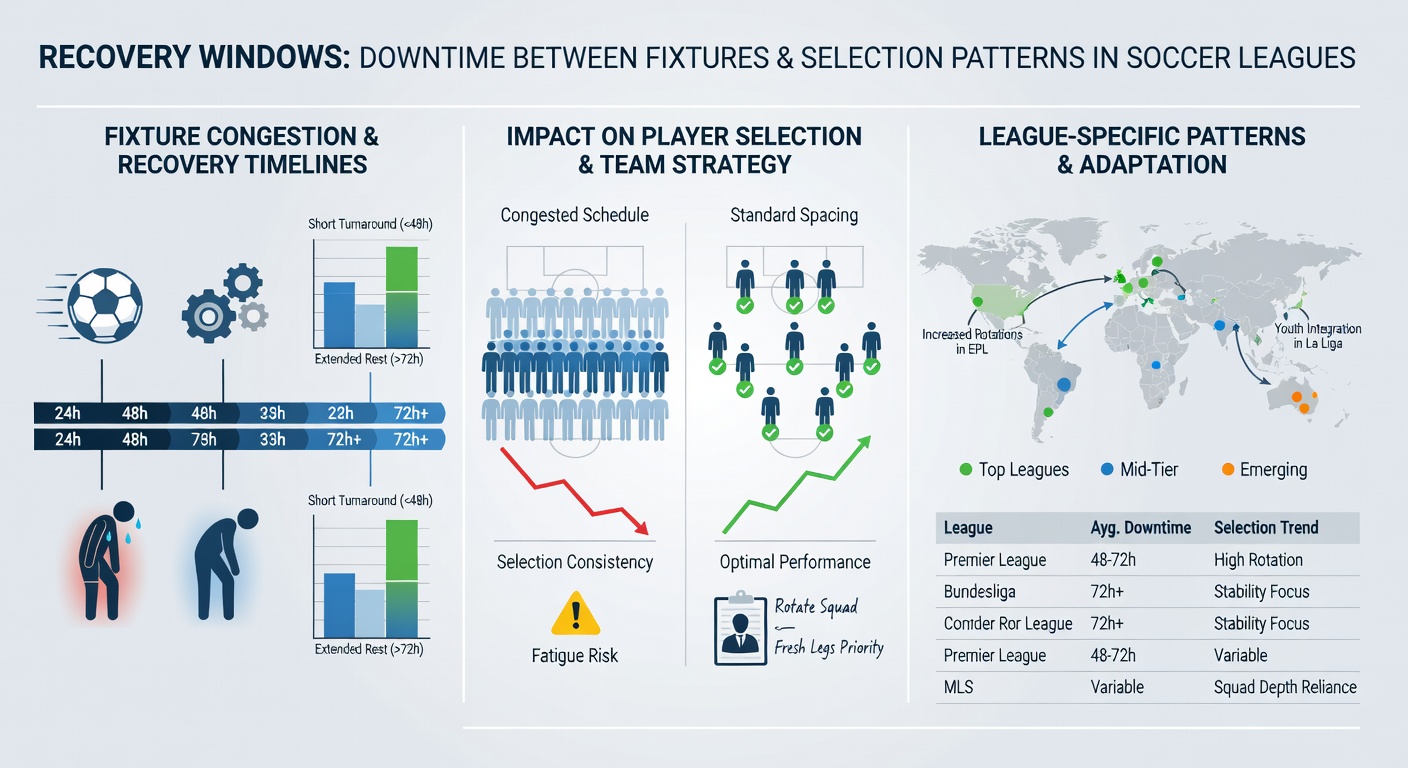
European soccer leagues operate under packed calendars where domestic cups, continental competitions, and international breaks compress available rest time. Premier League clubs face sequences of matches with as little as two days between games during winter months, and selection committees respond by rotating midfielders and defenders who log the highest minutes. Research from sports science departments indicates that players returning from international duty with fewer than five recovery days show measurable drops in high-intensity running output, prompting managers to bench key personnel for subsequent domestic fixtures.
Leagues in South America and Asia apply different spacing rules, yet the pattern remains consistent. When gaps exceed four days, starting elevens stabilize around core squads, whereas sub-three-day turnarounds increase substitute usage and bench rotation. Figures released by domestic federations reveal that teams averaging under 72 hours between matches alter lineups in roughly 60 percent of cases compared with longer rest periods.
Thoroughbred Racing Meets and Interval Planning
Thoroughbred racing calendars organize meets into sequences of races separated by days or weeks, and trainers adjust horse selection according to documented recovery requirements for different distances and surfaces. Graded stakes often follow one another with seven-to-fourteen-day intervals, allowing animals to regain glycogen stores and repair muscle microtrauma. Shorter gaps between allowance races lead connections to scratch runners showing elevated heart rates in pre-race checks or those who competed on firm ground within the previous 72 hours.
Track officials publish condition books months in advance, yet actual selection patterns shift when weather or track maintenance alters footing. In May 2026, several major North American circuits schedule back-to-back weekend cards with only five-day gaps between features, and early entries indicate increased use of fresh horses drawn from layoff lists. Veterinary monitoring programs track creatine kinase levels post-race, and readings above threshold values correlate with withdrawal rates that rise sharply when recovery windows fall below six days.
Tennis Circuit Scheduling and Player Availability
ATP and WTA tours structure events into weeks with varying recovery opportunities between tournaments, and ranking points plus prize money drive participation decisions. Hard-court swings in early spring often place events only seven days apart, prompting players and their teams to skip optional lead-in tournaments when surface transitions demand extra adaptation time. Data compiled by tournament organizers show that competitors reaching semifinals or finals in one week accept starts in the following event at rates 35 percent lower than those exiting in earlier rounds.
Clay-court seasons and indoor hard-court blocks introduce different spacing, and grass-court preparations in late spring carry their own constraints. When players schedule only four days between a final and the next first-round match, medical teams frequently advise withdrawal to protect against soft-tissue strain. Tournament entry lists published in May 2026 already reflect these calculations, with several top-20 players listed as alternates rather than direct acceptances following lengthy clay-court campaigns.
Cross-Sport Patterns and Data Integration
Observers across the three disciplines note that recovery windows under 96 hours consistently increase conservative selection while longer intervals support aggressive scheduling. Soccer analysts cross-reference GPS workload metrics with fixture lists, racing trainers monitor stride-length data from timing systems, and tennis support staff review serve-speed averages from match logs. Each dataset points to the same operational rule: compressed timelines force selectivity, whereas extended gaps allow broader participation.
Industry reports from the Australian Sports Commission and academic analyses published through the National Institutes of Health confirm measurable performance decrements when recovery falls below established thresholds. These findings feed directly into selection software used by professional staff, translating biometric thresholds into lineup or entry decisions.
Conclusion
Recovery windows function as structural constraints that reshape selection patterns season after season. Soccer squads rotate personnel, thoroughbred connections scratch or rest runners, and tennis players decline optional events according to the same underlying variable of available downtime. As calendars for 2026 continue to finalize, the relationship between fixture spacing and participation choices remains a central planning factor across all three sports.