When Schedules Collide: How Fixture Congestion Influences Outcomes in Combined Football, Horse, and Tennis Wagers
Written by Kai Walter · May 17, 2026

When Schedules Collide: How Fixture Congestion Influences Outcomes in Combined Football, Horse, and Tennis Wagers
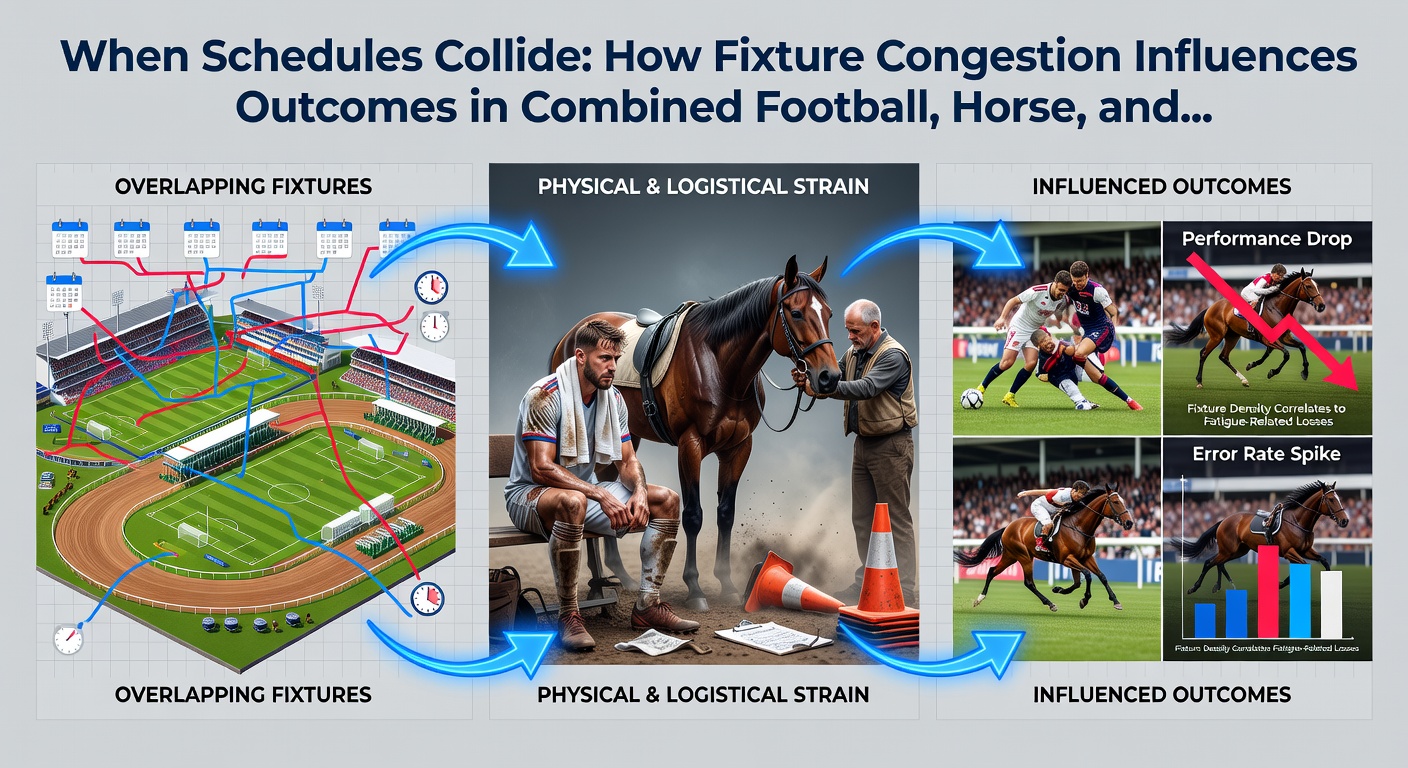
Fixture congestion creates measurable ripple effects across football, horse racing, and tennis, particularly when bettors construct combined wagers that link outcomes from all three sports. Data from major leagues and circuits show that periods of high fixture density correlate with shifts in performance metrics such as win rates, recovery times, and scoring patterns, which in turn alter the probabilities that underpin accumulator bets. Observers note these patterns most clearly during spring and early summer windows when domestic leagues, festival race meetings, and clay-court tennis events overlap.
Football Fixtures and Player Load
European domestic leagues plus cup competitions often schedule teams for three matches within eight days during late April and May, a pattern that repeats in the 2025-26 season with additional European fixtures extending into early summer. Sports science studies track declines in high-intensity running distance after such blocks, and league data indicate that teams playing their third match in nine days win approximately 12 percent fewer points on average than teams with at least four rest days. Bettors who include football legs in multi-sport accumulators therefore adjust implied probabilities downward for short-priced sides coming off congested periods, while longer-priced underdogs sometimes receive upward revisions when facing similarly fatigued opponents.
Horse Racing Recovery Windows
Flat and jumps seasons place horses on tight schedules during major festivals. Trainers routinely enter runners at two or three meetings within a fortnight when prize money justifies the risk, yet post-race veterinary reports compiled by Australian racing authorities reveal elevated rates of minor soft-tissue issues following such campaigns. Performance databases show that horses racing within 14 days of a prior start win roughly 18 percent less frequently than those rested 21 days or more. When these horses appear as legs in combined football-horse-tennis wagers, sharp operators recalibrate each-way and place markets accordingly, especially in May 2026 when Royal Ascot trials coincide with the French Open adn remaining Premier League fixtures.
Tennis Tournament Density
The ATP and WTA calendars pack ranking events into successive weeks on the same surface, creating consecutive-match loads that exceed 20 hours of court time within ten days for players advancing deep. Match statistics released by the International Tennis Federation demonstrate that players contesting three matches in five days record first-serve percentages three points lower than their seasonal averages. These dips become relevant for tennis legs within multi-sport accumulators because set and game totals move measurably when both competitors carry recent heavy schedules. Data from the 2025 clay-court swing already preview the same pattern expected again in May 2026 when Madrid, Rome, and Roland-Garros sit within a six-week span.
Cross-Sport Interactions in Accumulators
Combined wagers that require positive results across football, horse racing, and tennis amplify the impact of any single congested leg. A single underperforming football side or a horse returning too quickly can nullify the entire ticket even when the remaining selections align with form. Research published by the European Journal of Sport Science examined multi-sport betting portfolios and found that variance in returns increases by 27 percent when at least two legs originate from congested schedules. Bettors therefore monitor fixture lists published by governing bodies and adjust stake sizing or selection criteria to account for cumulative fatigue risk rather than treating each sport in isolation.
Practical Adjustments in Selection Processes
Analysts cross-reference fixture density tables with performance databases before finalizing accumulator lines. They flag football teams with fewer than three days between matches, horses entered off short breaks, and tennis players contesting back-to-back weeks without byes. In May 2026, for example, several Premier League clubs will face midweek European semi-finals immediately before domestic fixtures, while Royal Ascot qualifiers and the opening rounds of the French Open run concurrently. This overlap forces bettors to decide whether to exclude certain selections or to seek compensating value in opposing directions, such as backing overs in football matches involving tired defenses or horses with proven quick-recovery profiles.
Regulatory and Data Landscape
Governing bodies continue to publish fixture calendars earlier each season, allowing more time for fatigue modeling. Reports from the Australian Sports Commission highlight how structured rest protocols in racing reduce injury incidence, while similar transparency from North American tennis organizers provides granular match-load figures. Bettors who integrate these public datasets into their processes gain an informational edge when constructing combined wagers that span multiple disciplines.
Conclusion
Fixture congestion remains a quantifiable variable that shapes outcomes across football, horse racing, and tennis. When these sports appear together in single accumulator tickets, the compounding effect of schedule pressure becomes a central consideration for probability assessment. Ongoing publication of scheduling data and performance statistics supplies the raw material for systematic adjustments, enabling bettors to align selections with observed patterns rather than baseline form alone.